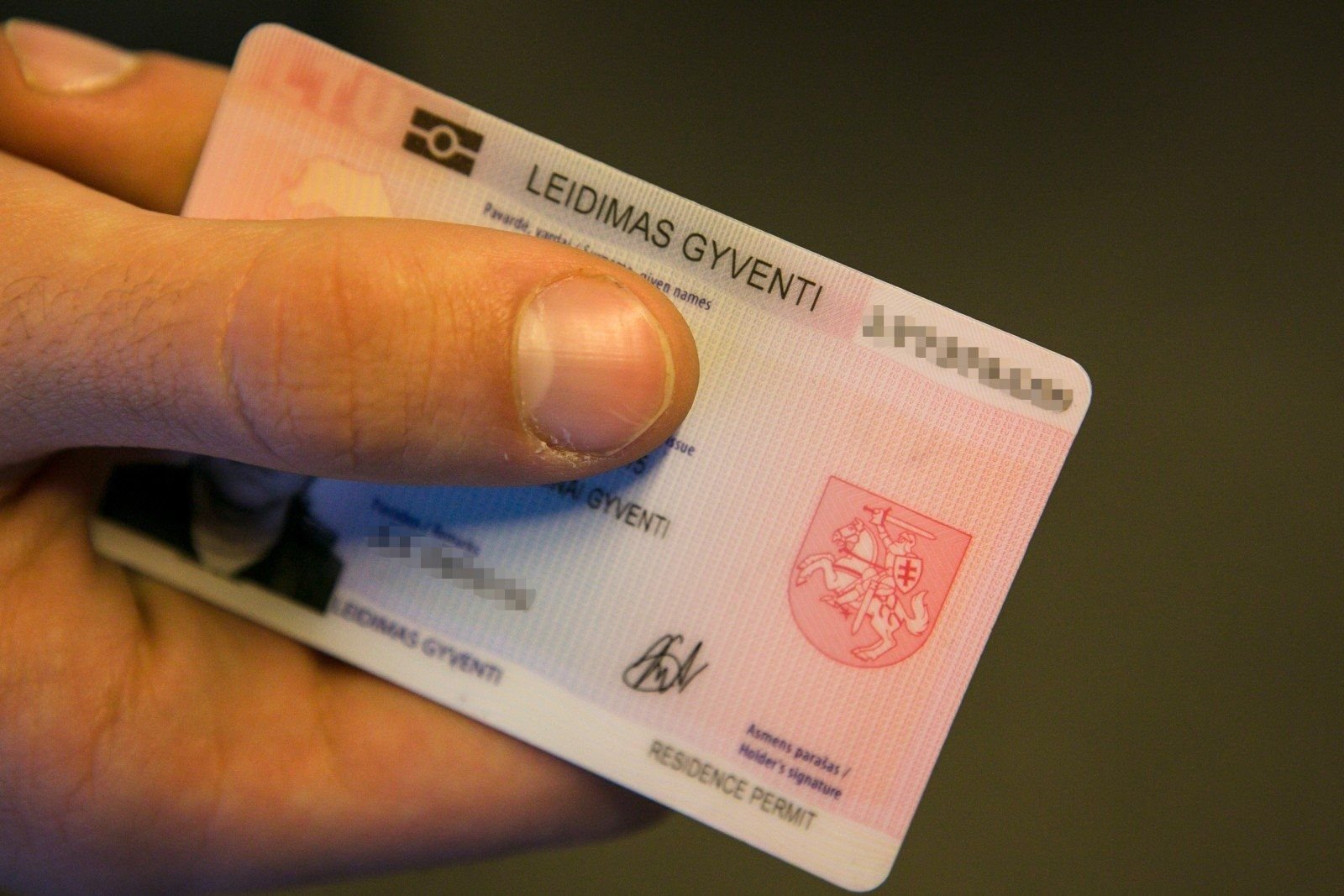
The BLUE CARD in Lithuania is an EU-wide work and residence permit designed to attract highly qualified specialists from third countries to the European Union labour market. Established under Council Directive 2009/50/EC, the Blue Card allows citizens of third countries to live and work in Lithuania and across the EU under streamlined conditions. It provides a faster and easier alternative to a standard work permit, ensuring legal access to the Lithuanian labour market for qualified professionals.
What Is the Blue Card in Lithuania?
Overview of the Blue Card in Lithuania
The Blue Card is an EU work and residence permit for highly qualified specialists. It allows legal employment and residence in Lithuania and other EU countries, providing mobility and professional recognition across the European Union.
Eligibility Criteria for the Blue Card
Who Can Apply
To qualify for a Blue Card in Lithuania, the applicant must have a valid employment contract with a Lithuanian employer and meet one of the following profiles:
Option 1 – Highly Skilled Worker (with diploma)
• Higher education diploma
• At least 1 year of relevant work experience
• Salary of at least 1.5 times the average monthly wage (AMW), or at least 1.2 AMW for IT sector positions
Option 2 – Highly Skilled Worker (without diploma)
• At least 5 years of similar work experience within the last 7 years (or 3 years for IT sector positions)
• Salary of at least 1.5 AMW, or 1.2 AMW for IT positions
• A document from the Ministry (EIMIN) certifying higher professional qualifications must be obtained prior to submitting the application
Important: Unskilled workers without education or work experience are not eligible for a Blue Card and cannot be recruited through this pathway.
Required Documents for a Blue Card
Essential Documentation
To apply for a Blue Card in Lithuania, the following documents are typically required:
- Valid Passport – minimum 6 months validity.
- Employment Contract – confirming position and salary (the employee will be covered by the employer’s health insurance upon employment).
-
Proof of Qualifications:
- Option 1 (with diploma): Higher education diploma.
- Option 2 (no diploma): Work experience documentation proving at least 5 years of similar experience within the last 7 years (3 years for IT sector positions), including employment contracts, experience letters from previous employers, and proof of taxes paid for the relevant period.
Note: Some documents may require translation into Lithuanian and certification (notarized or apostilled).
Application Process and Processing Time
Step-by-Step Process
- Gather all required documents and ensure translations and certifications are complete.
- Submit the Blue Card application either at the Migration Department of Lithuania or via an authorized service provider abroad (e.g., VFS Global).
- The authorities review the application and all supporting documents before issuing the Blue Card.
Processing Time
- Standard processing time for a Blue Card in Lithuania is 1–2 months.
- If additional documents or clarifications are needed, processing may take longer.
Please note: VFS Global services are not available for Russian nationals. Special conditions apply in those cases — please contact us for further guidance.
Duration of the Blue Card
The Blue Card in Lithuania is generally issued for up to 3 years, depending on the employment contract duration.
Blue Card and Family Reunification
Residence Permits for Family Members
Family members of the Blue Card holder may accompany the principal applicant.
- They are granted Temporary Residence Permits in Lithuania, valid for the same duration as the principal holder’s Blue Card.
- This ensures family unity and legal residence rights while the main applicant works in Lithuania.
- Family members who hold a Temporary Residence Permit based on family reunification have free access to the Lithuanian labour market and can be employed immediately.
Benefits of the Blue Card
- Fast-track access to the Lithuanian labour market;
- Legal work and residence across EU member states;
- Higher wages compared to standard work permits;
- Eligibility for family reunification;
- Blue Card issued for 3 years (compared to 2 years for a standard work-based Temporary Residence Permit);
- Recognition as a highly qualified professional, improving future immigration prospects.
Contact MIGRATION LAW CENTER for Assistance
For guidance on obtaining a Blue Card in Lithuania, including eligibility assessment, required documents, and application procedures, contact MIGRATION LAW CENTER:
- Email: info@migration.lt
- Phone: +370 6 1861886
We assist highly qualified specialists and their families in navigating the Lithuanian immigration process efficiently and legally.
Frequently Asked Questions (FAQ) About the Blue Card in Lithuania
Q1: Who can apply for a Blue Card in Lithuania?
A1: Highly qualified specialists from third countries with a valid employment contract in Lithuania and proof of professional qualifications can apply for the Blue Card.
Q2: Can family members join the applicant?
A2: Yes, spouses, minor children, and dependents may apply for Temporary Residence Permits to accompany the Blue Card holder for the same duration.
Q3: How long does it take to process a Blue Card?
A3: Standard processing usually takes 1-2 months, depending on document completeness. Complex cases or requests for additional documents may extend the timeline.
Q4: Can I apply from outside Lithuania?
A4: Yes, applicants can submit their Blue Card application through authorized service provider abroad (e.g., VFS Global) without traveling to Lithuania.
Q5: What is the minimum salary requirement for a Blue Card?
A5: Applicants must receive a salary of at least 1.5 times the average monthly wage (AMW) in Lithuania. For IT sector positions, the minimum salary requirement is lower and amounts to at least 1.2 times the AMW.
Q6: How long is the Blue Card valid?
A6: The Blue Card is generally valid for up to 3 years. If the employment contract is shorter, the Blue Card remains valid for 3 months after the contract ends.